Your wedding day is one of the most significant moments of your life, and every detail matters including the flowers you choose. While aesthetics are important, understanding the deeper meanings behind wedding flowers can add a layer of symbolism and intention to your celebration. Each bloom carries its own message, and selecting flowers based on their meanings can help you tell your unique love story through nature’s most beautiful creations.
Why Flower Meanings Matter for Your Wedding
Flowers have communicated emotions and messages for centuries. When you incorporate meaningful blooms into your wedding, you’re not just decorating you’re creating a visual narrative of your love, commitment, and hopes for the future. Understanding flower meanings and symbolism allows you to make intentional choices that reflect your values and relationship. Beyond personal significance, flower meanings add depth to your wedding theme, create conversation starters for guests, and provide sentimental value in photos for years to come.
Popular Wedding Flowers and Their Meanings
Roses: The Classic Choice
No discussion of wedding flowers is complete without roses. These timeless blooms are the epitome of romance, but their meaning varies by color. White roses symbolize purity, innocence, and new beginnings making them perfect for traditional weddings. Red roses represent passionate love and desire, ideal for couples who want to make a bold romantic statement. Pink roses convey grace, admiration, and joy, while peach roses symbolize gratitude and sincerity. Roses work beautifully in bridal bouquets, centerpieces, boutonnieres, and ceremony decorations.
Peonies: Lush Romance and Prosperity
Peonies have become increasingly popular in modern weddings. These lush, romantic blooms symbolize prosperity, good fortune, happy marriage, and bashfulness. In Chinese culture, peonies are considered the “king of flowers” and represent honor and wealth. The soft, billowy petals create stunning, romantic bouquets and arrangements. They’re available primarily in late spring and early summer, making them perfect for seasonal weddings that emphasize prosperity and new beginnings.
Calla Lilies: Elegant Sophistication
Calla lilies are the embodiment of elegant simplicity. Their sleek, sculptural shape and pristine appearance symbolize magnificent beauty, purity, and faithfulness. These flowers also represent the divine and are associated with resurrection and rebirth, making them meaningful for couples starting their new life together. Calla lilies work exceptionally well in modern, minimalist weddings and are available in white, ivory, pink, purple, and even black for dramatic effect.
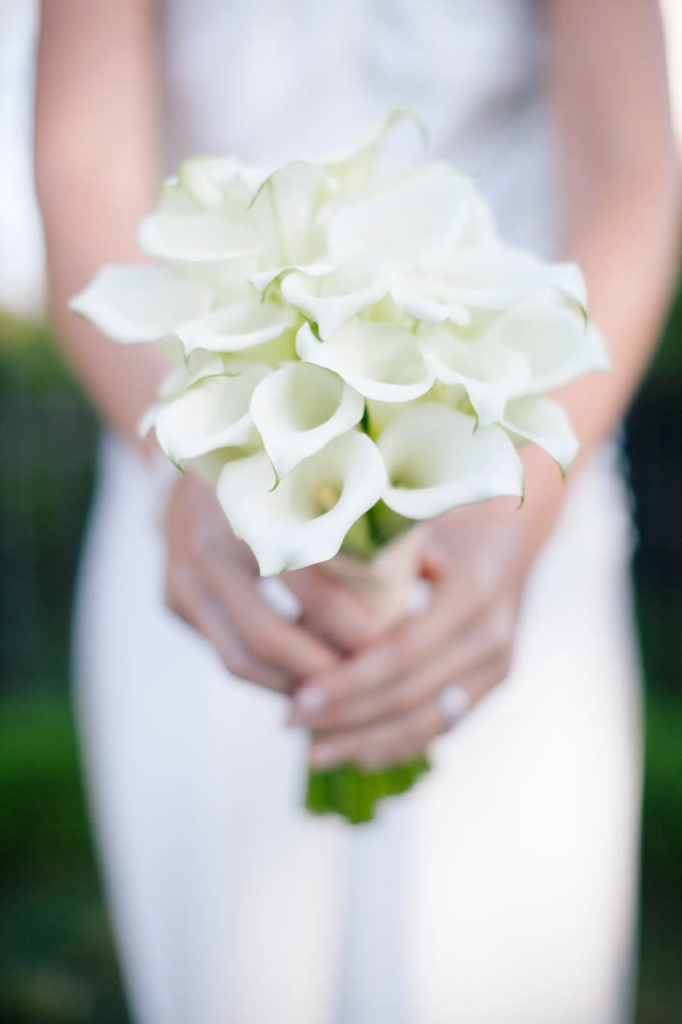
Elegant white calla lily wedding bouquet representing purity and faithfulness for modern bride
Hydrangeas: Heartfelt Gratitude
Hydrangeas are beloved for their voluminous blooms and romantic appearance. These flowers symbolize heartfelt emotions, gratitude, and understanding. In the context of weddings, they represent the sincere emotions between partners and gratitude for finding your soulmate. Available in shades of white, blue, pink, purple, and green, hydrangeas are budget-friendly flowers that create a big visual impact, making them excellent for couples looking to maximize their floral budget.
Tulips: Perfect Love
Tulips represent perfect love and are associated with spring renewal and rebirth. Different colors carry specific meanings: red tulips declare love, white tulips symbolize forgiveness and worthiness, purple tulips represent royalty, and yellow tulips signify cheerful thoughts and sunshine. Spring brides often gravitate toward tulips for their fresh, clean appearance and cheerful colors. They work beautifully in both traditional and modern wedding styles and are more budget-friendly than many other popular wedding flowers.
Gardenias: Secret Love and Purity
Gardenias are highly fragrant flowers that symbolize purity, secret love, and joy. Their creamy white petals and intoxicating scent make them a romantic choice for weddings. In the Victorian language of flowers, gardenias conveyed the message “you’re lovely” and represented secret love. These delicate flowers work wonderfully in bridal bouquets, boutonnieres, and as floating decorations.
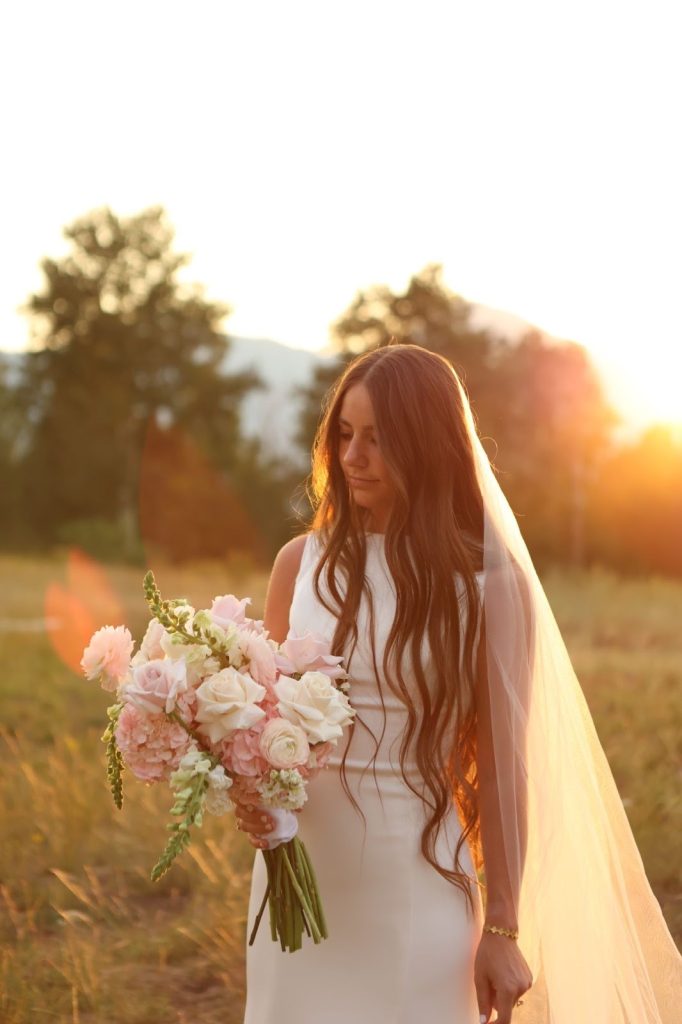
Bride holding romantic wedding bouquet with white roses and pink peonies symbolizing love and prosperity
How to Choose Wedding Flowers Based on Meaning
Consider Your Love Story
Think about the journey you and your partner have taken together. Are there specific flowers that hold special significance in your relationship? Perhaps your partner gave you a certain flower on your first date, or maybe there’s a bloom that reminds you of a memorable moment you shared. Incorporating these personal connections makes your wedding flowers even more meaningful.
Reflect Your Values and Vision
Choose flowers whose meanings align with your values as a couple and your vision for your marriage. If family and prosperity are important to you, consider peonies. If you value simplicity and faithfulness, calla lilies might be perfect. For couples who prioritize gratitude and emotional connection, hydrangeas are an excellent choice.
Combine Multiple Meanings
You don’t have to choose just one type of flower. Creating arrangements with multiple blooms allows you to layer different meanings and create a richer symbolic narrative. A bouquet combining roses (love), peonies (prosperity), and hydrangeas (gratitude) tells a complete story about your relationship and hopes for the future.
Consider Seasonal Availability
While many flowers are available year-round through global sourcing, choosing seasonal blooms that are naturally available during your wedding date can be more cost-effective and environmentally sustainable. For more guidance on this, check out our guide on seasonal flower meanings.
Creating Meaningful Arrangements
Your bridal bouquet is the most personal floral arrangement of your wedding day. Choose blooms that speak to your heart and represent your feelings about marriage and your partner. Many brides include a primary flower that represents their main emotion or value, accent flowers that add complementary meanings, and greenery for texture to symbolize growth and renewal.
Ceremony decorations set the tone for your vows. Consider using flowers with meanings related to commitment, new beginnings, and love. Reception flowers can be more playful and varied, mixing blooms that represent celebration, joy, and gratitude since you’re thanking guests for sharing your special day.
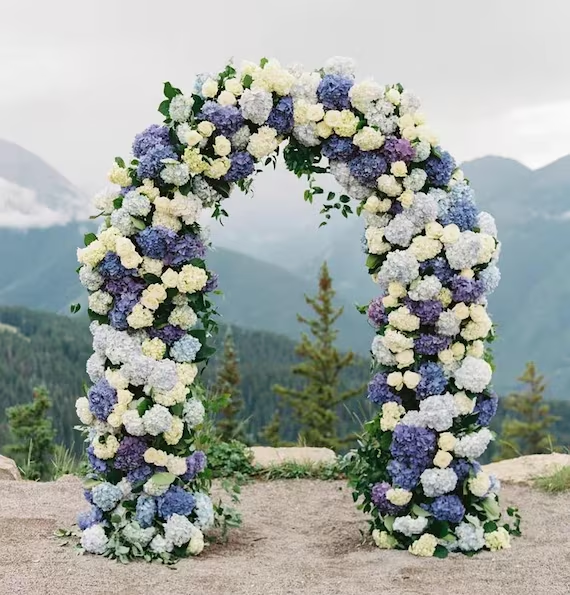
Wedding ceremony arch decorated with pink hydrangeas and white roses symbolizing gratitude and pure love
Working with Your Florist
Once you’ve identified flowers with meanings that resonate with you, bring this information to your florist consultation. A skilled florist can help you create cohesive arrangements using your chosen flowers, suggest complementary blooms you might not have considered, work within your budget while maintaining symbolism, and ensure seasonal availability and freshness.
Share your love story with your florist and explain why certain flowers are meaningful to you. This personal context will help them create arrangements that are not only beautiful but also deeply significant.
Final Thoughts
Choosing wedding flowers based on their meanings adds a layer of intentionality and romance to your celebration. Whether you opt for classic roses, lush peonies, elegant calla lilies, or a combination of blooms, understanding what each flower represents allows you to craft a visual love letter that will be preserved in your memories and photographs forever.
Your wedding flowers are more than decorations they’re symbols of your commitment, hopes, and dreams for your marriage. By selecting blooms with meaningful symbolism, you create a wedding that’s not only beautiful but also rich with personal significance.
For more information about flower symbolism across different occasions and cultures, explore our comprehensive guide to flower meanings. If you’re looking for birthday-specific flower meanings, check out our post on birth flowers by month.